

Why Sizing and Setup Matter
If your custom coasters are too small, they look cheap and fail at the table. If they are too large, they can feel awkward, raise costs, and create packaging headaches. Most buyers do not struggle with design first. They struggle with fit, thickness, print setup, and the small production choices that determine whether a coaster feels premium or forgettable.
That is where Best Patches stands out. As a custom product specialist, the brand works with businesses, event planners, breweries, cafes, and creators who need coasters that look sharp, protect surfaces, and support real branding goals. The right size is not just a technical detail. It changes usability, visual balance, shipping efficiency, and repeat order rates.
Custom coasters are personalized drink mats made in branded shapes, sizes, materials, and finishes for marketing, hospitality, retail, gifting, or home use. They are commonly produced in paperboard, cork, rubber, wood, acrylic, ceramic, or silicone, and each material needs a different setup to print well and perform well.
Get the sizing wrong and even strong artwork can fail in production. Get the setup right and a simple coaster becomes a useful, low-cost brand asset that stays on desks, bars, conference tables, and kitchen counters long after the first drink is gone.
Table of Contents
- How to choose the right coaster size
- Best shapes, thicknesses, and materials
- Artwork setup for clean printing
- Business use cases and sizing comparisons
- Common mistakes, risks, and limitations
- What I learned from real Best Patches projects
- Ordering checklist for smoother production
- Final recommendations from Best Patches
How to Choose the Right Coaster Size
The standard coaster size most buyers start with is 4 x 4 inches for square pieces or 4 inches in diameter for round ones. That size works for most coffee mugs, pint glasses, cocktail glasses, and water tumblers. It is also the easiest size to stack, package, and store.
But standard is not always best. If your audience uses oversized tumblers, stemless wine glasses, or insulated mugs, you may need to move up to 4.25 to 4.5 inches. For tasting flights, espresso service, wedding favors, or tightly packed event tables, a smaller format can make more sense.
What the right size should do
A good coaster should:
- Catch condensation beyond the base of the glass
- Leave visible room for the logo or artwork
- Fit naturally on small tables, bars, and trays
- Stack neatly without curling or edge damage
- Stay cost-efficient in bulk production and shipping
According to a 2024 study from the Advertising Specialty Institute, practical promotional products tend to generate stronger long-term brand exposure because people keep and reuse them. Coasters fall into that “practical” category only when they work well at the point of use. A coaster that looks good but does not fit the drink is not really promotional. It is clutter.
“The best coaster is sized for the drink first and branded second. If it fails at moisture control or tabletop stability, the design cannot save it.”
Quick size ranges by beverage use
Use these ranges as a starting point:
- 3.5 inches: espresso cups, small candles, tasting events, compact gift sets
- 4 inches: the all-around standard for bars, cafes, offices, and retail sets
- 4.25 to 4.5 inches: larger tumblers, mason jars, stemless wine glasses
- 5 inches or more: specialty branding, oversized mugs, decorative tabletop use
Best Shapes, Thicknesses, and Materials
Size is only half the decision. Shape and material change how a coaster feels in hand, how it prints, and how durable it will be after repeated use. In 2025, personalization trends noted by McKinsey continued to show that buyers reward products that feel tailored, tactile, and premium. For coasters, that often means material choice matters as much as the graphic.
Round, square, and custom die-cut shapes
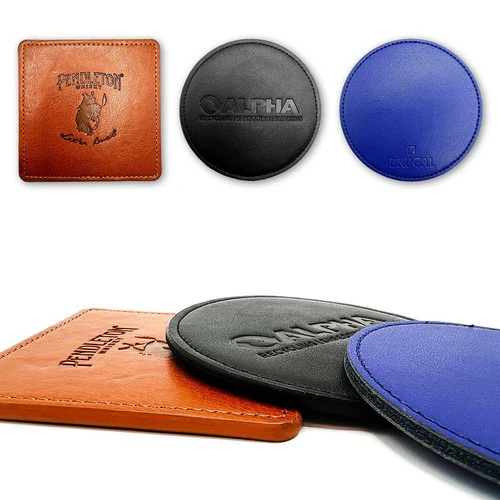
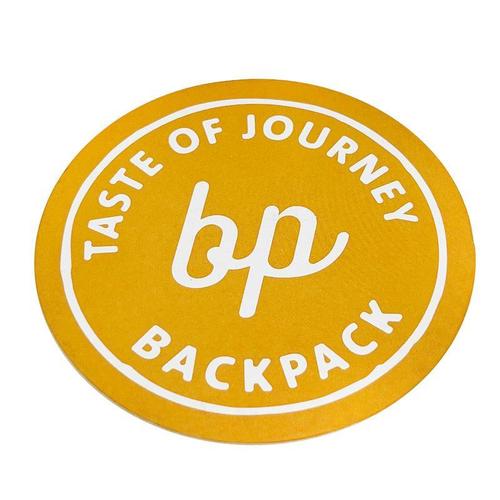
Round coasters are classic and forgiving. They match most glass bases and feel balanced with circular logos or badge-style branding. Square coasters offer more usable print area and a cleaner modern look, especially for typographic designs.
Custom die-cut coasters can be powerful for brand recall, but they require more discipline. A bottle-shaped coaster, a mascot silhouette, or a state outline can stand out, yet overly complex edges increase production difficulty and raise the chance of chipping, warping, or weak corners.
How thick should custom coasters be?
Thickness depends on the material and intended use:
- Paperboard: often around 1 to 2 mm, ideal for events, bars, and short-run promotions
- Cork: often 3 to 5 mm, popular for home goods and gift sets
- Rubber or neoprene: often 3 to 5 mm, good grip and water resistance
- Acrylic or wood: often 3 to 4 mm, stronger visual impact for retail or display
- Ceramic: often 5 mm or more, premium look with higher break risk and weight
Thicker is not always better. Heavy coasters can feel premium, but they also raise mailing costs, require sturdier packaging, and can look bulky in slim hospitality settings.
Matching material to the job
If you want absorbency, paperboard and certain porous stone options perform well. If you want durability and wipe-clean convenience, rubber, silicone, acrylic, and ceramic are stronger choices. Cork offers a middle ground: warm appearance, decent grip, and giftable appeal.
Artwork Setup for Clean Printing
Many coaster problems start before production even begins. Blurry logos, cropped edges, muddy colors, and warped borders often trace back to setup files, not manufacturing errors. Clean preparation protects your budget and your brand reputation.
Core file rules to follow
Ask your supplier for exact specs, but these standards work for most custom coaster projects:
- Build artwork at final size, including bleed if required.
- Use vector files such as AI, EPS, or SVG whenever possible.
- Keep raster images at 300 dpi or higher at final print size.
- Convert fonts to outlines to avoid substitution issues.
- Leave a safe margin inside the cut line so text does not crowd the edge.
- Use CMYK references for print-critical colors when exact brand matching matters.
Why bleed and safe zone matter
For most coasters, a 0.125-inch bleed is a good baseline if the design runs to the edge. Your safe zone should stay inside the trim line so logos and copy do not feel cramped or get clipped. This matters even more on round and die-cut shapes, where edge precision can vary slightly from piece to piece.
Color, finish, and readability
Dark, saturated art can look rich on screens but muddy on absorbent stock. Metallic effects may need specialty printing. Pastels can shift depending on substrate color. If your brand color is non-negotiable, ask for a pre-production proof or sample photo under neutral lighting.
“Design for the material, not just for the mockup. Ink behaves differently on cork, coated board, acrylic, and ceramic, and those differences show up fast on a coaster.”
Business Use Cases and Sizing Comparisons
Different industries need different setups. A brewery handing out thousands of coasters cares about absorbency and cost. A wedding planner may care more about elegance, packaging, and photo appeal. A retail brand might prioritize tactile finish and repeat purchase value.
| Business Type | Recommended Size | Best Material | Why It Works |
|---|---|---|---|
| Craft brewery | 4" round | Absorbent paperboard | Low cost, strong moisture control, easy bulk distribution |
| Coffee shop chain | 4" square | Cork-backed board or rubber | Works for mugs, adds grip, gives room for menu or QR branding |
| Wedding or event planner | 4.25" round or die-cut | Acrylic or wood | Photogenic, giftable, and suitable for keepsake sets |
| Corporate gifting brand | 4" to 4.5" square | Ceramic with cork backing | Premium feel, better retail perception, ideal for boxed sets |
According to Deloitte’s 2025 consumer industry outlook, buyers continue to favor products that balance functionality with personalization. That is exactly why generic sizing underperforms. People notice when a coaster seems made for the actual glassware and setting.
Common Mistakes, Risks, and Limitations
Custom coasters are relatively simple products, but simple products leave less room to hide mistakes. A small sizing or setup issue is immediately visible in use.
Frequent mistakes I see
- Choosing a size based only on artwork, not the drinkware
- Using highly detailed logos on small coaster formats
- Ignoring moisture performance in favor of looks alone
- Skipping proof checks for cut lines, bleed, and centering
- Selecting heavy premium materials without planning shipping costs
- Overusing intricate die-cut shapes that weaken edges
Potential trade-offs to consider
Paperboard is affordable and highly practical, but it wears out faster. Ceramic looks upscale, but it is heavier and breakable. Acrylic is visually sharp, though it can show scratches over time. Cork has a warm natural feel, but print sharpness can vary depending on the method used.
There is also a branding risk: if your coaster is too decorative to use, people may set it aside. If it is too plain or too thin, it may be used once and forgotten. The strongest projects balance aesthetics, utility, and production reality.
What I Learned From Real Best Patches Projects
I once worked with a small coffee brand that originally asked for 3.5-inch square custom coasters because they wanted to save on unit cost and fit more pieces into a countertop holder. On paper, the idea made sense. But their primary drinkware was a wide ceramic mug, and the mug base nearly matched the coaster dimensions. Condensation and drips reached the table edge too easily.
At Best Patches, we recommended moving them to a 4-inch square cork-backed coaster with a simplified logo lockup and a stronger contrast color palette. The per-unit price increased slightly, but the client saw fewer complaints from café partners and a stronger visual presence in customer photos. The better fit made the product feel intentional rather than improvised.
In another project, I helped an event client planning a high-end corporate retreat. They wanted custom die-cut coasters shaped like a mountain range. The first concept had too many sharp points, thin peaks, and narrow cut bridges. It looked great on screen but would have been fragile in real use. We revised the outline into a softer contour, increased the overall size to 4.25 inches, and switched from a printed board to a thicker acrylic setup.
The result photographed beautifully, stacked well in the welcome boxes, and survived transport without edge damage. That project reinforced a lesson I keep returning to: the smartest custom coaster setup is often the one that trims visual complexity while improving real-world performance.
Ordering Checklist for Smoother Production
Before you approve a run, pause and review the basics. This saves time, money, and avoidable reprints.
Use this pre-production checklist
- Confirm the primary drinkware the coaster must support.
- Choose a size based on actual base diameter, not guesswork.
- Select material for the use case: absorbent, reusable, decorative, or giftable.
- Check artwork legibility at final print size.
- Review bleed, safe zone, and cut line placement.
- Ask whether your finish affects color, texture, or durability.
- Verify packing method, shipping weight, and breakage protection.
- Request a proof or sample if color accuracy matters.
According to Adobe’s 2024 creative workflow findings, brands lose time and budget most often during revision cycles caused by asset inconsistency and approval gaps. For custom products, that means your best savings usually come from better setup, not just lower quoted pricing.
Final Recommendations From Best Patches
The right custom coaster setup starts with use, not decoration. Start from the glass size, then choose material, thickness, shape, and artwork style that support the environment where the coaster will actually live. A 4-inch standard works for many brands, but the best results come from matching the product to the occasion instead of forcing every project into one template.
Best Patches recommends these next actions:
- Measure your most common drinkware before approving any coaster size.
- Shortlist two materials based on performance needs, then compare proofs side by side.
- Simplify artwork early so your print remains sharp across the full production run.
References
- Advertising Specialty Institute, 2024: Promotional product usage and long-term brand exposure insights relevant to practical branded items.
- McKinsey, 2025 consumer personalization reporting: Market direction showing continued buyer preference for tailored, experience-led products.
- Deloitte, 2025 consumer industry outlook: Business context on the value of functionality paired with personalization.
- Adobe, 2024 creative workflow findings: Useful guidance on proofing, asset consistency, and revision efficiency.
FAQ
What is the standard size for custom coasters?
-
The most common standard is 4 inches wide, either as a round coaster or a 4" x 4" square coaster. That size works well for most mugs, glasses, and tumblers while leaving enough room for branding.
What material is best for custom coasters?
-
It depends on your goal:
Paperboard for low-cost promotional runs and absorbency
Cork for a warm, giftable feel
Rubber or neoprene for grip and reusability
Acrylic or ceramic for premium branded sets
How thick should custom coasters be?
-
Most reusable custom coasters are around 3 mm to 5 mm thick, while disposable or event-style paperboard coasters are often thinner, around 1 mm to 2 mm. Thicker options feel more premium, but they also increase shipping weight and packaging needs.
What file format should I use for coaster artwork?
-
Vector formats are usually best because they stay sharp at production size:
.AI, .EPS, or .SVG for logos and clean graphics
.PNG at 300 dpi or higher for raster artwork
Outline fonts and include bleed if your design goes to the edge
Are custom coasters good for business branding?
-
Yes, especially for bars, cafes, breweries, events, and gifting programs. They are practical, visible at the point of use, and relatively affordable in bulk. Their branding value is strongest when the size, material, and print setup are matched to the real drinking environment.