









Why Event Buyers Get Burned by Bad Wristbands
If you are ordering custom festival wristbands in bulk, the biggest risk is not paying a few cents too much per unit. The real risk is ending up with wristbands that tear at check-in, smear after a few hours in the sun, or make your event look cheaper than your ticket price suggests. For festivals, brand teams, and venue operators, a weak wristband becomes an operations problem fast.
That is why experienced buyers look beyond color options and unit cost. They focus on durability, closure security, print clarity, scan performance, and supplier consistency. At Best Patches, we have seen the same pattern repeatedly: event teams that treat wristbands as a mission-critical product avoid entry bottlenecks, counterfeit problems, and post-event complaints.
Custom festival wristbands are branded admission bands made for concerts, fairs, campus events, nightlife venues, and multi-day festivals. They help control access, support security, reinforce event identity, and in some cases enable RFID entry, cashless payments, or VIP tier management.
In 2026, that job description is broader than ever. A wristband is no longer just a strip around the wrist. It is part ticket, part security tool, part wearable branding, and sometimes part data system.
Table of Contents
- Material strength decides perceived quality
- Print quality must survive real festival conditions
- Closure security protects revenue
- RFID and data readiness for modern events
- Production consistency is the hidden bulk-order risk
- Compliance, comfort, and sustainability
- How to vet a supplier before a large order
- Common mistakes that ruin wristband orders
- Next moves for a better order
Material Strength Decides Perceived Quality
The first quality standard is simple: the wristband material has to match the event duration, crowd behavior, and price point. A one-night bar crawl can get away with lower-cost options. A three-day outdoor music festival cannot. If the material fails, everything else fails with it.
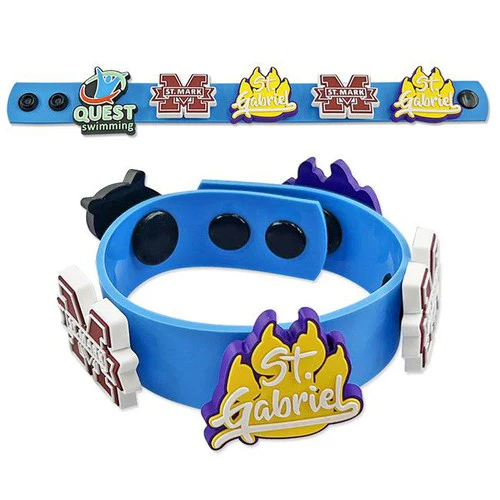
The most common bulk options each serve a different business case. Tyvek works for short-term access and tight budgets. Vinyl offers better tamper resistance for day events and water parks. Woven fabric feels premium and is often the best fit for multi-day festivals where souvenir value matters. Silicone works for brand merchandise, but it is not always ideal for access control unless paired with an additional security system.
How Each Material Performs Under Pressure
- Tyvek: Low cost, fast to print, good for single-day admissions, but easier to crumple or tear under rough use.
- Vinyl: Stronger than Tyvek, water-resistant, harder to transfer, good for all-day crowd control.
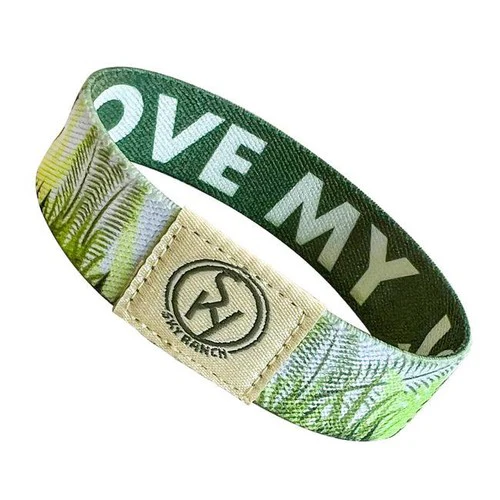
- Woven fabric: Best for premium branding, long wear, and photo appeal; excellent for VIP or multi-day use.
- Satin or polyester fabric: Soft, vibrant, and comfortable, but closure quality determines whether it stays secure.
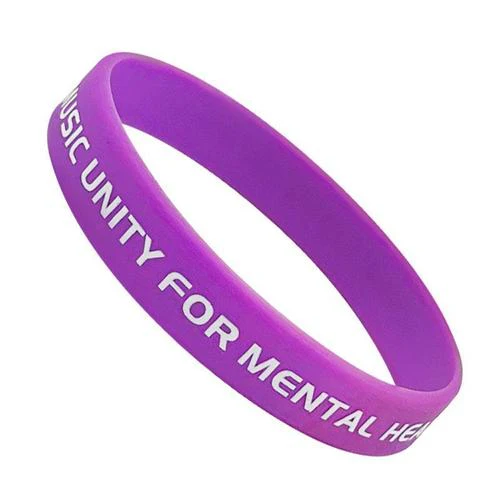
- Silicone: Good for merchandise or awareness campaigns, less ideal as a sole admission device for high-security events.
According to the 2024 Eventbrite TRNDS report, attendees continue to favor experiences that feel memorable and share-worthy. That matters here. If the wristband looks flimsy in photos or starts fraying before the headliner performs, it undercuts the event experience you sold.
A quality buyer asks a blunt question early: will the band still look intentional after heat, sweat, rain, and crowd friction? If the answer is unclear, the material choice is wrong.
Print Quality Must Survive Real Festival Conditions
Beautiful digital mockups hide a lot of future problems. The second standard is print performance in the real world. Festival wristbands face abrasion, sunscreen, spilled drinks, UV exposure, and thousands of hand movements. If your text smears or your black turns charcoal gray after a few hours, your branding loses credibility and your security markings become harder to verify.
Good print quality is not only about color matching. It also involves line sharpness, barcode readability, edge registration, and how well the ink or dye bonds to the substrate. Screen printing, sublimation, thermal transfer, and woven methods all behave differently. The right method depends on the material, design complexity, and whether the wristband will be scanned.
Artwork Setup That Prevents Muddy Color and Failed Scans
For bulk custom festival wristbands, clean file preparation makes a measurable difference. Fine text, thin outlines, gradient-heavy artwork, and low-contrast QR zones are common failure points. If a sponsor logo must remain legible at wrist size, the art needs to be simplified before production, not after the proof is approved.
We recommend keeping critical text high contrast, avoiding ultra-thin strokes, and confirming Pantone expectations when exact brand color matters. If a band includes RFID plus a visible code, leave enough quiet space around scannable areas. That small layout discipline can save your gate team from reading bands by flashlight at 8 p.m.
“A wristband design is successful only when security staff can verify it in two seconds or less. If the artwork slows recognition, it is not good event design.”
Future Market Insights noted in a 2024 review of RFID adoption in event environments that organizers are steadily moving toward connected access systems to improve throughput and attendee convenience. That trend raises the bar for print quality because visual and digital identification increasingly work together, not separately.
Closure Security Protects Revenue and Crowd Control
The third quality standard is closure security. It sounds technical, but the business outcome is plain: a weak closure makes wristband transfer easier, and transferable bands lead to revenue leakage, unauthorized access, and crowd management headaches.
Different events need different closure systems. A casual community fair may only need adhesive or snap-based options. A ticketed festival with alcohol zones, backstage access, or age-restricted sections usually needs locking beads, tamper-evident barrels, or one-way clasps. Premium fabric means little if the lock can be loosened and shared.
Matching the Lock to Your Risk Level
Think in terms of risk tiers rather than aesthetics alone. If your event has multiple access levels, artist compounds, or vendor-only corridors, the closure should be part of your security policy. That also includes color coding, serial numbering, and visible differentiation between guest types.
| Event Scenario | Best Material | Security Need | Recommended Closure or Print |
|---|---|---|---|
| College spring festival | Tyvek | Low to moderate | Tamper-evident adhesive with bold color coding |
| Water park weekend event | Vinyl | Moderate | Plastic snap closure with serial numbering |
| Three-day music festival | Woven fabric | High | One-way locking barrel with anti-counterfeit thread |
| VIP brand activation lounge | Satin fabric | High | Custom bead lock with metallic foil branding |
The challenge is balance. Over-engineer the closure and guests may struggle to put bands on correctly. Under-engineer it and you invite sharing, fraud, or line disputes. The best wristbands feel easy for attendees and hard for gate crashers.
RFID and Data Readiness Are No Longer Optional for Major Festivals
The fourth standard is future readiness. Not every event needs RFID, NFC, or cashless integration, but large festivals increasingly do. If your event is growing, buying wristbands that cannot support future tech can force a costly reset later.
RFID-enabled custom festival wristbands can reduce queue times, tighten access control, support cashless purchases, and improve sponsor activations. The gain is not only operational. It also changes how attendees move through the site. Faster entry usually means happier staff, fewer choke points, and a smoother first impression.
When Smart Wristbands Pay for Themselves
RFID becomes especially valuable when your event has:
- Multiple entry gates
- VIP or backstage zoning
- Cashless food and beverage stations
- High-volume sponsor touchpoints
- Repeat entry and re-entry requirements
That said, smart wristbands come with tradeoffs. Unit costs rise. Testing matters more. Reader calibration, encoding accuracy, and backup plans become part of the order conversation. If the event team lacks strong on-site technical support, a simpler band may actually produce better results.
PwC’s 2025 outlook on experience-led consumer engagement emphasized that people increasingly expect frictionless physical interactions from brands and venues. That expectation applies directly to event entry. A wristband that scans quickly is no longer a nice extra for premium festivals. It is becoming part of the baseline attendee experience.
Production Consistency Is the Hidden Bulk-Order Risk
The fifth standard is the least glamorous and often the most expensive when ignored: consistency from batch to batch. Bulk orders fail less often because of design and more often because of uneven execution. One carton arrives with correct colors, another arrives darker. One run scans cleanly, another has misaligned codes. One lock grips well, another slips.
This is where suppliers separate themselves. A capable partner has documented tolerances, inspection steps, proofing workflows, and replacement policies. A weak supplier has a nice sales page and a vague answer to every production question.
What We Learned at Best Patches From a Rush Order
I remember a summer rush project where a regional music organizer came to Best Patches after another vendor missed the deadline and sent inconsistent samples. The event needed bulk custom festival wristbands for general admission, VIP, artist access, and beverage control. The biggest issue was not artwork. It was consistency across categories, because the staff needed instant visual recognition under pressure.
We rebuilt the job around a tighter proofing system: standardized color references, enlarged microtext where needed, and a lock test across several hand sizes. We also split the production approval into separate checkpoints for fabric weave, print clarity, and closure fit instead of approving everything in one shot. That added discipline up front, but it prevented confusion at check-in and gave the event team confidence that every carton matched the master sample.
On another order, I pushed for an extra pre-shipment photo review because the metallic accent looked slightly muted in one image. That small pause turned out to be the right call. The supplier adjusted the finish before dispatch. If we had skipped that check, the client would have received a “premium” VIP wristband that looked ordinary under venue lighting.
“Bulk quality is not about one perfect sample. It is about whether carton sixteen looks and performs like carton one.”
Compliance, Comfort, and Sustainability Matter More in 2026
Quality is not only about toughness. A wristband can be durable and still be wrong for the audience. Comfort matters for all-day wear, especially at summer festivals, family events, and multi-day experiences. Rough edges, itchy fibers, sharp plastic components, and heavy closures create a poor user experience that guests remember.
There is also a compliance layer. Buyers should verify skin-contact safety, dye stability, and material claims. If a supplier advertises recycled content or eco-friendly production, ask what that actually means. Is it recycled polyester? FSC-certified packaging? Water-based ink? A vague sustainability claim is not a quality standard. It is marketing until verified.
Skin Safety and Eco Claims Buyers Should Verify
Ask suppliers for material specifications, testing information, and practical disposal guidance. For public-sector events, school events, and brand activations with strong ESG positioning, these details carry more weight than they did a few years ago. Organizers are under more scrutiny from sponsors and attendees, and sloppy sourcing can create reputational risk.
The tension here is real. Some sustainable options cost more or have a narrower color range. Some highly secure plastic components are harder to recycle. The right answer is not always the greenest option on paper. It is the option that balances safety, functionality, budget, and end-of-life reality.
How to Vet a Supplier Before You Place a Large Order
If you are sourcing at scale, the buying process itself should be structured. Too many teams focus on price first and only ask operational questions after a problem appears. A better process protects timeline, budget, and brand quality.
A Practical Buying Checklist
- Define the event use case clearly. State duration, expected crowd size, environment, and access levels.
- Match material to wear time. Do not use economy bands for premium multi-day traffic.
- Request physical samples. Photos cannot confirm texture, closure feel, or print resilience.
- Test security features. Pull, twist, wet, and try to transfer the band between wrists.
- Validate artwork for scale. Shrink logos and text to actual wristband size before approval.
- Review lead times and contingency plans. Ask what happens if a carton fails inspection.
- Confirm packaging logic. Sorted packaging by access tier saves time during event setup.
One of the easiest ways to compare suppliers is to ask the same operational questions to each one. The quality of the answer matters almost as much as the answer itself. Precise suppliers tend to produce precise work.
Common Mistakes That Ruin Wristband Orders
Even experienced event teams make avoidable errors when ordering in bulk. Most of them happen because the wristband is treated as a promotional extra rather than a functional product.
- Choosing by price alone: the cheapest option often raises staffing and replacement costs later.
- Approving tiny text: what looks elegant in a PDF can become unreadable on fabric.
- Ignoring closure fit: a premium band with a weak lock is still a weak band.
- Skipping sample tests: color and comfort are hard to judge from a mockup alone.
- Ordering too late: rushed production increases the chance of inconsistency.
- Overcomplicating the design: too many colors or effects can hurt legibility and scan speed.
The other mistake is assuming all custom festival wristbands are basically the same. They are not. Small differences in weave density, lock quality, print registration, and packaging accuracy create very different results on event day.
Final Take: What to Do Next
The five standards that matter most are material strength, print durability, closure security, tech readiness, and production consistency. If those five areas are handled well, your wristbands do more than admit people through a gate. They support brand perception, reduce fraud, improve operations, and hold up under real use.
Best Patches recommends three practical next steps:
- Start with the event brief, not the artwork. Define duration, security level, and attendee flow before choosing material.
- Request live-use samples. Test bands for comfort, water exposure, scan readability, and transfer resistance.
- Build in a proofing checkpoint. Approve color, lock style, and packaging logic separately before full production.
If your order is large, urgent, or tied to premium branding, treating wristbands like a strategic purchase is the safer move. That approach costs less than fixing a poor decision at the gate.
References
- Eventbrite TRNDS Report 2024 — Used for attendee experience trends and the growing importance of memorable, shareable event touchpoints.
- Future Market Insights, 2024 RFID and Smart Event Technology Analysis — Used to support the shift toward RFID-enabled access and connected event operations.
- PwC 2025 consumer experience outlook — Used for the broader expectation of frictionless physical brand interactions, relevant to event entry and payments.
FAQ
What material is best for custom festival wristbands?
-
It depends on event length and security needs. Tyvek works well for short single-day events, vinyl is stronger for wet or active environments, and woven fabric is the premium choice for multi-day festivals where durability and branding both matter.
How many custom festival wristbands should I order for a large event?
-
A safe rule is to order your confirmed quantity plus a small overage for staff, replacements, VIP changes, and on-site errors. Many organizers add 3% to 10% depending on how many access tiers they manage.
Are RFID festival wristbands worth the higher cost?
-
Often, yes—especially for high-volume or multi-zone events. RFID can improve:
Faster gate entry
Cashless purchases
VIP access control
Sponsor activations and attendee tracking
How can I tell if a wristband closure is secure enough?
-
Test it before bulk approval. A good festival closure should be hard to loosen once locked and show tampering if someone tries to remove it. Ask your supplier to provide:
Pull-test results
Close-up videos of the lock
Samples for transfer testing between different wrist sizes
What artwork file should I send for festival wristband printing?
-
Vector files are usually best. Send:
.AI, .EPS, or .SVG for logos and text
.PDF with outlined fonts if vector export is limited
High-resolution .PNG only if your supplier allows raster artwork
Can custom festival wristbands be eco-friendly and still durable?
-
Yes, but you should verify the exact claim. Recycled polyester fabric, lower-waste packaging, and safer inks can improve sustainability without sacrificing performance. The key is asking for material details rather than accepting broad “green” language.